

From everyday behavior to actionable clinical endpoints
Wearables that capture the unspoken truth.
Passive data
Real-world behavior
Clinical evidence
Rigorous validation
Connected workflows
eCOA + CRO ready



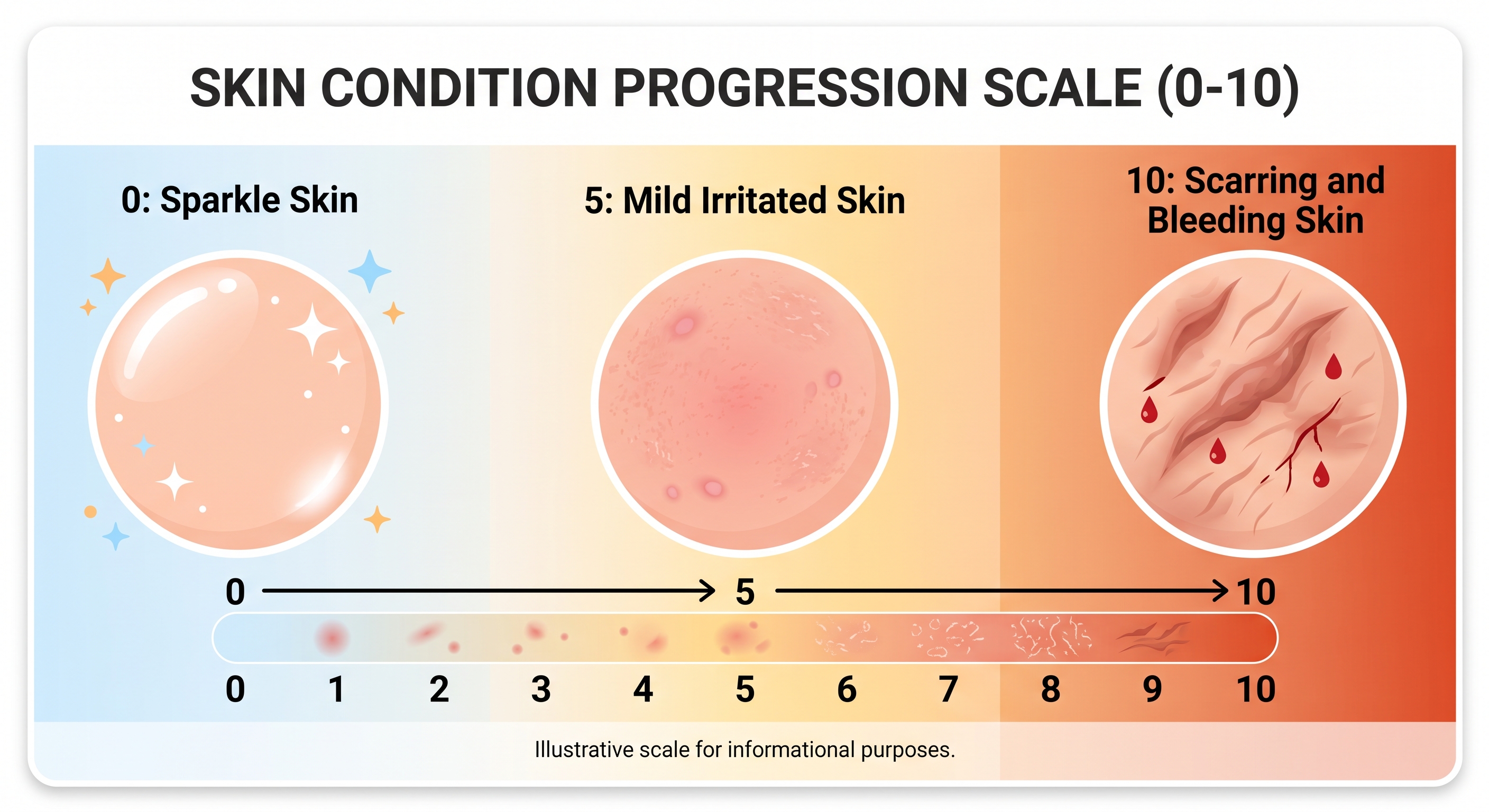

“On a scale of zero to 10, how much pain are you feeling?” It is a familiar question for anyone who has tried to describe pain to a doctor.
The numerical rating scale, or NRS, helps clinicians to track changes in a patient’s pain over time. But a single number can’t describe a patient’s experience easily.
However, Jeffrey Mogil, a professor of pain studies at McGill University, said a patient’s report remains the best available way to measure pain.
“In general, the advantage of the scales is that they work well within the subject,” Mogil said. “The disadvantage of the scales is that we don’t know what they mean between subjects.”
A seven on the Numerical Rating Scale can have different meanings between people, Mogil added that self-reported numbers become more useful when a patient's score changes over time.
Mogil compares verbal pain reporting to democracy.
“It’s just like democracy, right?” Mogil said. “You know, the old joke about democracy: It’s a terrible system; it’s just better than any other system that’s been tried. And I think verbal pain report is the same. It’s a terrible way to do it, but everything else we’ve tried is worse.”
No laboratory test directly measures a patient’s experience of pain.
The origins of the NRS are difficult to trace. In a 1978 study published in Annals of the Rheumatic Diseases, W.W. Downie and his colleagues compared four pain-rating scales. The 11-point numerical scale performed better in that study than a four-category verbal scale and a continuous visual analog scale, according to the study.
The visual analog scale, or VAS, offers an alternative. Patients mark their pain level along a 10-centimeter line anchored by “no pain” at one end and “worst pain.” Clinicians measure the mark’s distance from the first endpoint, according to a The National Library of Medicine.
Mogil said patients may remember a number they previously reported and allow it — or what they believe a clinician expects — to influence their next answer. A mark on an unnumbered line may be harder to remember.
“And why that’s better than a numerical rating scale is that there’s nothing to memorize there,” Mogil said.
Mark Jensen, a professor of rehabilitation medicine at the University of Washington and a clinical psychologist who studies pain, disagrees.
“I can remember if I put a mark on a line,” Jensen said. “I don’t know why I would remember a number more than a mark.”
Jensen rejects that subjectivity of a patient’s answer makes it unreliable.
“If you ask someone to give you a score on a zero-to-10 scale, and they say seven, trust it,” Jensen said.
Still, trusting the number does not mean it tells the entire story. Dr. Gil Yosipovitch, director of the Miami Itch Center at the University of Miami, said numerical scales measure intensity while leaving out other dimensions of a patient’s experience.
“A single number does not capture qualities such as burning, stinging, unpleasantness, sleep disruption, emotional distress or interference with daily life,” Yosipovitch said.
Timing can also influence a patient’s answer. Mogil said patients may feel different pain in a doctor’s office than at home. Patients recalling an average may remember their worst pain instead.
“So you’re asking someone to do something that’s inherently very difficult,” Mogil said.
The tool needs to make sense to the patient.
Jensen believes the Wong-Baker Faces Scale, which uses illustrations of facial expressions to represent different pain levels, can work better for patients unfamiliar with numerical ratings.
He recalled a farmer in Nepal for whom a zero to 10 scale held little meaning.
“You could ask them, ‘How many handfuls of rice do you hurt?’ and they could tell you,” Jensen said.
Researchers have searched for biological indicators that could measure pain independently of a patient’s report. Mogil said wearable devices that track heart rate, blood pressure and other measurements have not produced reliable pain biomarkers.
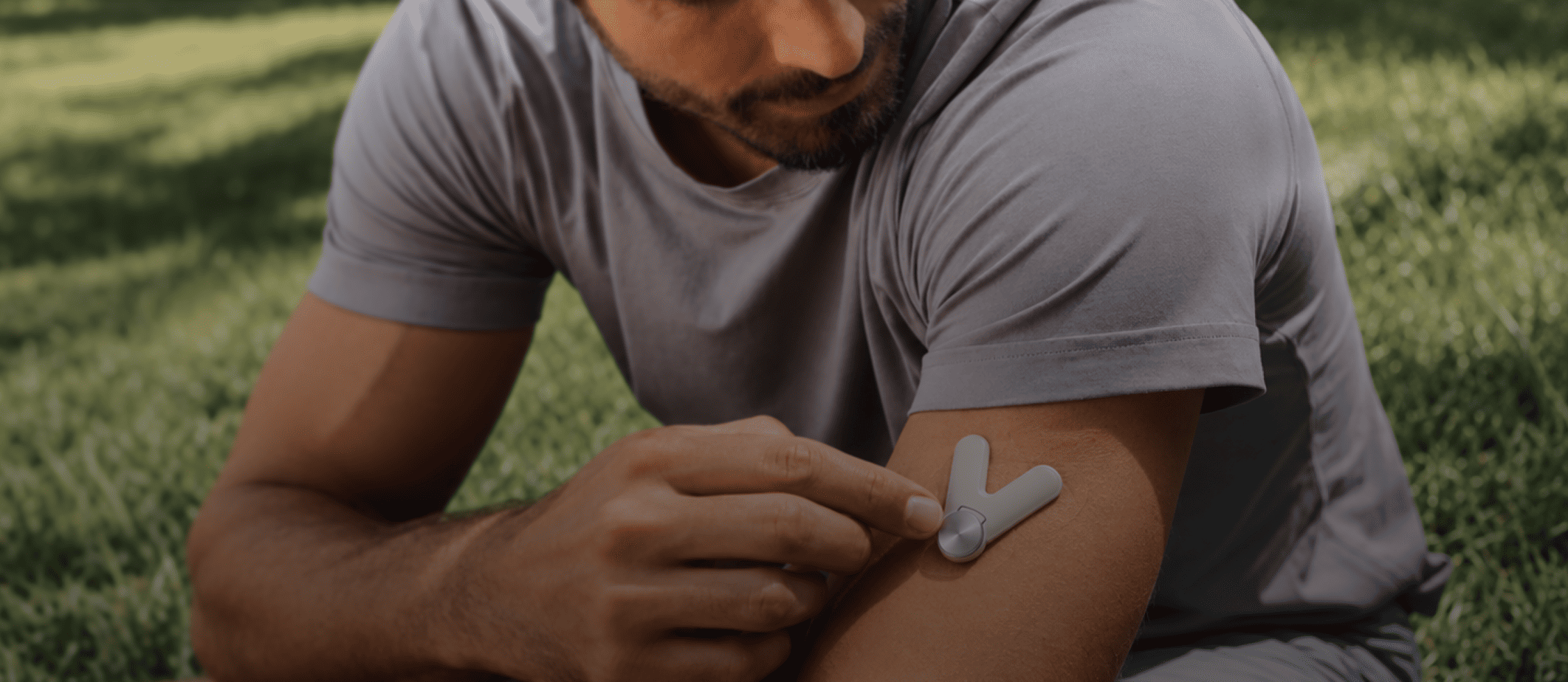
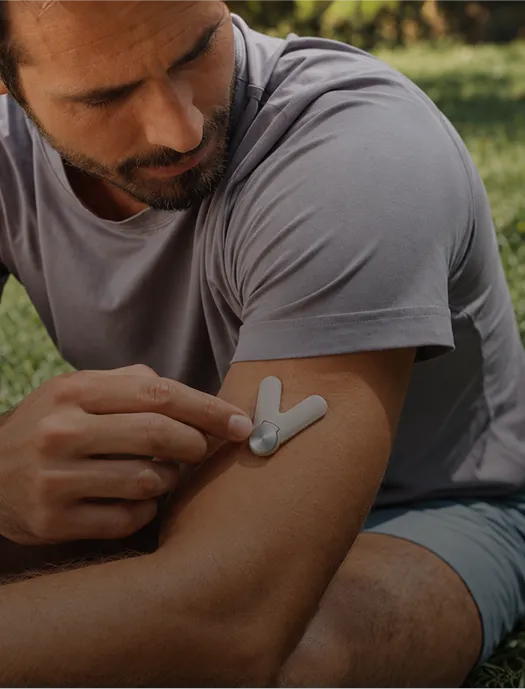
Itch may offer a clearer opportunity for behavioral measurement because motion sensors can track scratching, an observable behavior associated with the sensation.
“With pain, we don’t have a behavior that is so closely linked to the perception,” Mogil said. “So with itch, you’re in a better situation than we are with pain.”
Jensen expects technology to provide additional data, but doesn’t believe it will replace patients self-reporting.
“In 50 years, we’ll still be asking people, ‘On a zero-to-10 scale, how much do you hurt?’” Jensen said.
Disclosure: The author is working with a team developing wearable technology designed to measure scratching. No specific product or company affiliated with that work was evaluated or promoted in this story.
When itching kept Carol Roberts, president of PBCers, from sleeping, she lowered herself into a bathtub filled with cold water and soaked. After her bath, she would air-dry her skin and turn on classical music.
“It’s almost like when you lie down to go to sleep, your mind has nothing else to focus on,” Roberts said. “So it focuses on this itch, and you just cannot sleep.”
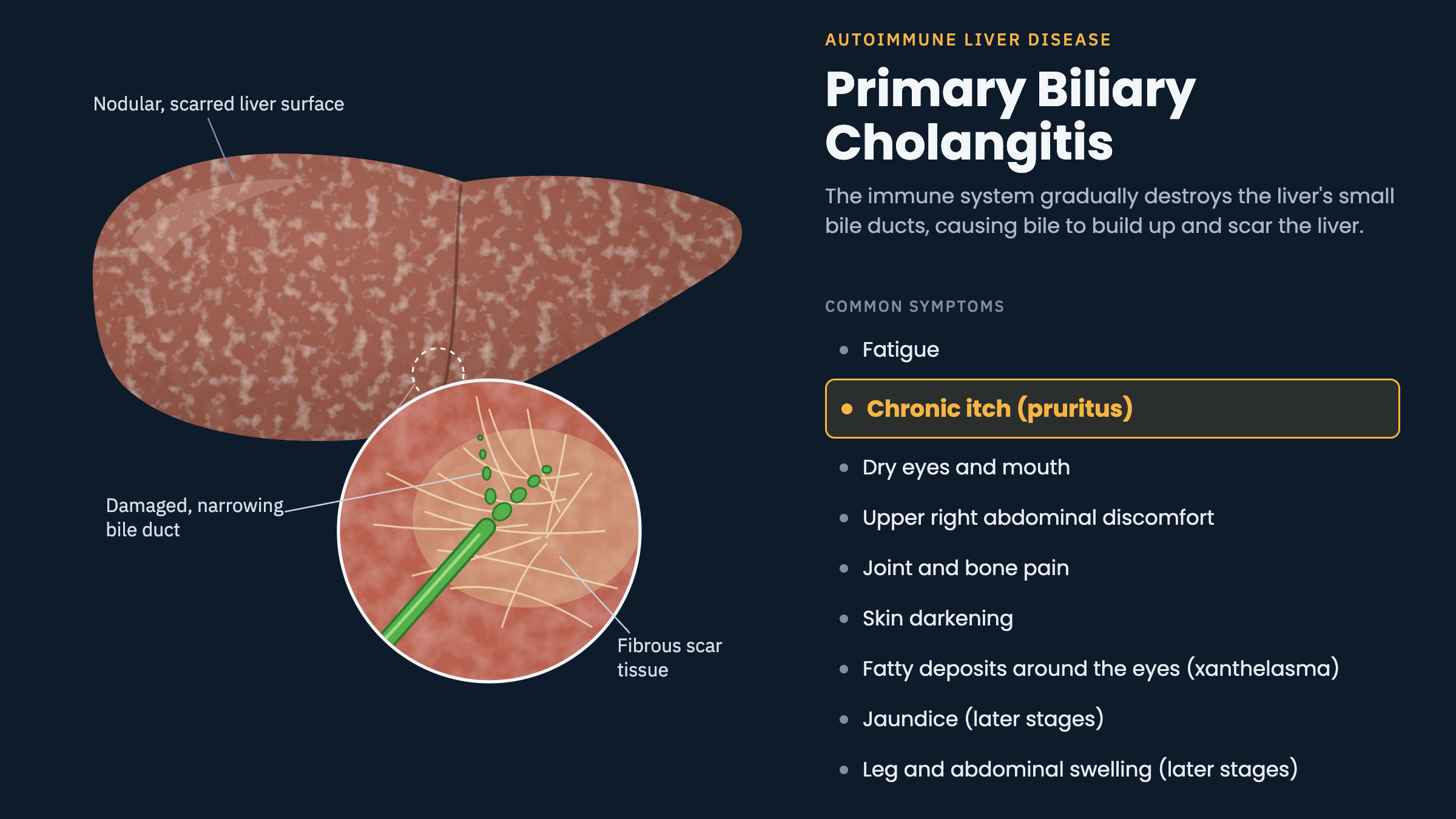
Roberts, a patient advocate living with primary biliary cholangitis, or PBC, said it was a way to take her mind off the crawling, burning sensation beneath her skin.
For people living with PBC, chronic itch is more than an irritation. It can disrupt sleep, damage skin and affect daily life. Since itch is experienced differently from one person to another, its severity can be difficult for patients to describe, clinicians to assess and researchers to measure.
PBC is a rare autoimmune disease that progressively damages the liver’s small bile ducts. While treatment can slow the disease, chronic itch remains a troubling symptom for many patients, according to the American Liver Foundation.
Despite the physical and mental toll itch can have on patients, its severity is difficult to measure.
James Meixiong, a UCSF dermatologist and physician-scientist who studies chronic itch, said clinicians rely on numerical rating scales, or NRS, that ask patients to rate their itch from zero to 10. The scores can help determine whether a treatment is working, but they cannot quantify the sensation.
“To me, it’s almost like a thumbs up or thumbs down,” Meixiong said.
Scratching is easier to observe, he said.
Sakeen Kashem, a UCSF dermatologist and physician-scientist who studies the connection between the immune system and itch, said patients may scratch more at night, sometimes without realizing it. Disrupted sleep is one of the most common problems he hears about from patients with chronic itch.
“If they can’t sleep at night, they will always say that they feel like they’re going crazy because they can’t just get some rest,” Kashem said.
Jeanine Mione, vice president of PBCers and a patient living with PBC, sometimes doesn’t realize how much she has scratched until the next morning.
“When you wake up and there’s blood on the sheets because you’ve been scratching all night to the point that you’re bleeding, that’s a problem,” Mione said.
At its worst, Mione said it felt like bugs crawling beneath her skin. She would often get out of bed and apply cold water-soaked towels, ice, lotions and creams to the affected area for relief.
“It’s horrible because it affects everything,” Mione said. “It affects your mood, your sleep, your stamina to do things during the day.”
Chronic itch symptoms vary between patients. Capturing the experience with a single number is difficult, according to a 2019 review published in the journal Itch.
Meixiong said he believes scratching is objective, but what people describe as an itch is subjective.
One study of 225 people with PBC found that 89% reported experiencing itch, while only 39% had itch documented in their medical records during the previous year. Researchers concluded that medical records may underestimate the burden of PBC-related itch.
“Some people are trying to incorporate accelerometers into trial designs where a person wears something on the wrist so it can track how often they’re scratching,” Meixiong said. “It would probably be a much more reliable quantitative measure of how they’re doing.”
Still, wearable technology has limits. Meixiong said an accelerometer would need to differentiate scratching from ordinary movement, while behaviors such as rubbing may be harder to identify.
“I think they should be used together initially,” Meixiong said of objective scratching data and patient-reported itch scores.
Kashem said additional data could help physicians understand whether treatments are working and potentially respond more quickly.
“I think we can intervene better and faster and more precisely,” Kashem said.
Roberts said explaining what her itch feels like is difficult.
“Sometimes it's really bad and, you know, a week later it’s not,” Roberts said. “If a doctor says to you, ‘How’s your itch?’ you’re going to think right then for the last couple days.”
Disclosure: The author is working with a team developing wearable technology designed to measure scratching. No specific product or company affiliated with that work was evaluated or promoted in this story.

A patient’s experience often begins long before they enter a clinic. For many living with conditions with chronic itch as a symptom, it can be unpredictable, impacting sleep, work, and overall quality of life. Traditional clinical assessments capture only a small part of this story — a single moment in time.
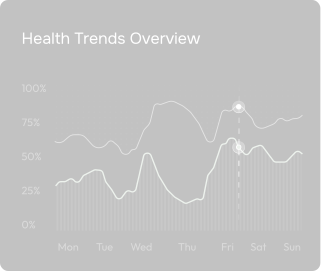
By incorporating continuous behavioral data, we can better understand how symptoms fluctuate in real life and make more informed decisions in clinical trials. This approach helps ensure that treatments are evaluated based on the full patient experience, not just what happens during scheduled visits.
01 — Experience happens everywhere
Every interaction across the patient journey can influence perception, engagement, and trust.
02 — Continuous signals matter
Ongoing data can reveal changes earlier than periodic surveys alone.
03 — Context creates meaning
Combining different signals helps teams understand not only what changed, but why.
04 — Experience and outcomes are connected
Understanding patient experience alongside treatment and engagement data can support more informed decisions.
05 — Insight should lead to action
The most valuable measurement systems help teams identify where attention is needed and act on those insights.
“When we look beyond the clinic, we see the real patient experience — and that’s where we can make a meaningful difference.”
Dr. Emily Lin